

Incoterms for Power Equipment Imports: FOB vs CIF vs DAP
A practical guide to choosing Incoterms for Chinese power-equipment imports: the cost and risk trade-offs of FOB, CIF, DAP and DDP.
Key takeaway
For Chinese power-equipment imports, FOB keeps the buyer in control of freight and insurance but hands over risk at the ship's rail; CIF hides freight inside a single price but lets the seller pick the carrier and insure for minimum cover; DAP and DDP shift delivery to your door but blur who pays duty and who carries transit risk. For heavy, project-critical gear (transformers, switchgear, inverters), the trap is rarely the Incoterm itself; it is the gap between the Incoterm, the insurance terms, and the contract's risk-of-loss clause. Recommended: FOB or CIF with buyer-nominated marine cargo cover, never DDP for first-time suppliers.
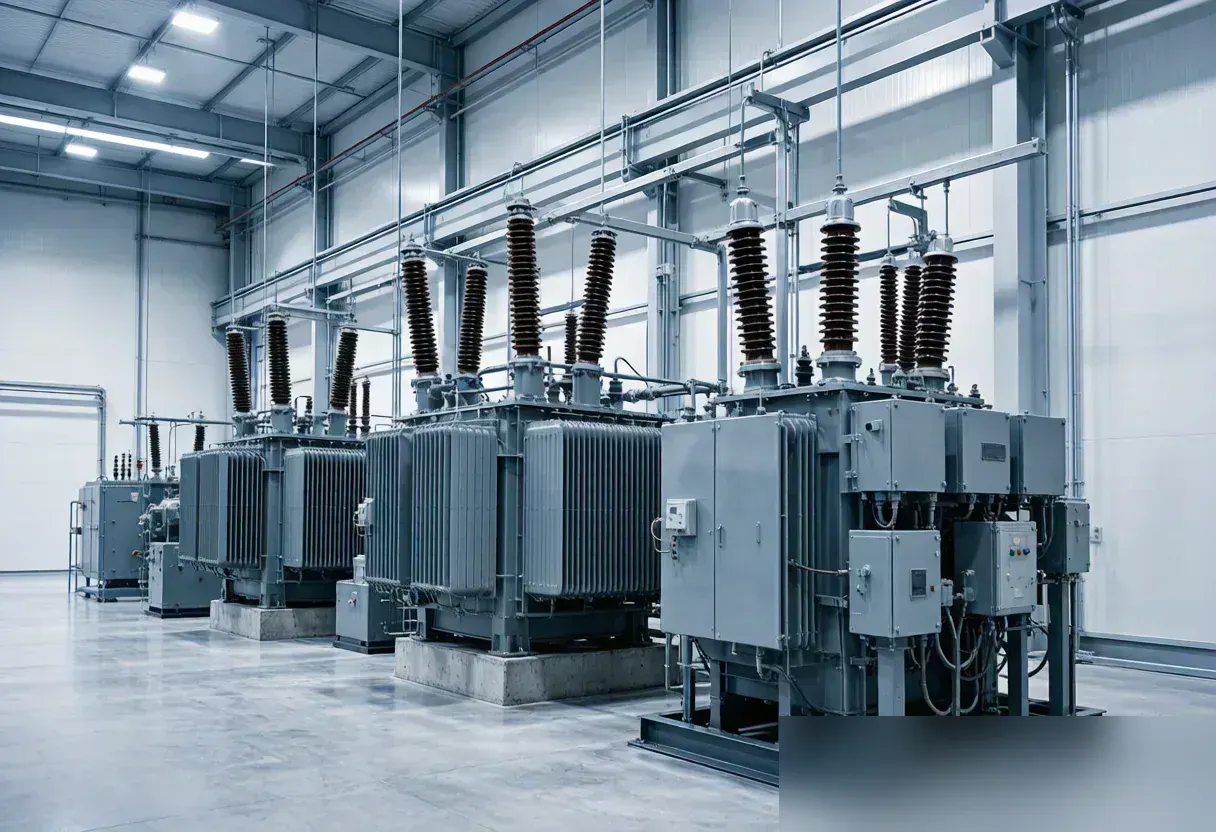
When an overseas EPC buyer gets a quote from a Chinese power-equipment factory, the Incoterm is often the last line on the page, and the first thing that goes wrong. A 20 MVA transformer, a 40.5 kV switchgear skid, or a string of 1500 V inverters is not a commodity you can re-ship cheaply. Get the delivery term wrong and you can end up paying for freight twice, insuring for the wrong value, or carrying the transit risk on a unit you have not even inspected.
Here is how we read the four terms that matter for power equipment, the cost-versus-risk trade-off of each, and the clauses we write into the contract regardless of which term you pick.
The four terms you will actually see
Power-equipment quotes from China cluster around four Incoterms. Everything else (EXW, FCA, CPT) shows up occasionally, but these four cover 90% of real deals.
FOB (Free On Board). The seller delivers the goods on board the vessel at the named Chinese port. Risk and cost transfer the moment the unit crosses the ship’s rail; strictly, the moment it is “safely loaded” on board under Incoterms 2020. The buyer nominates the carrier, books the freight, and buys marine cargo insurance. FOB is the default we recommend for first-time buyers because it gives you control of the freight forwarder and the insurance policy.
CIF (Cost, Insurance and Freight). The seller pays freight and insurance to the named destination port. Risk still transfers at the Chinese port of loading (same point as FOB), even though the seller keeps paying for carriage afterwards. The catch: the seller arranges insurance, but only for “minimum cover” (Institute Cargo Clauses C) unless you specify otherwise, and the policy is often in the seller’s name with you named as beneficiary, which makes claims slow and political.
DAP (Delivered at Place). The seller delivers to a named place in your country, ready to unload. The seller carries transit risk all the way to that place; you handle import clearance, duties, and taxes. DAP is attractive because the factory owns the journey until your door, but it pushes the duty and clearance burden onto you, and it is where the “who actually carries the risk when the truck is late at the border” arguments start.
DDP (Delivered Duty Paid). The seller delivers, cleared, duty paid, to the named place. The factory carries everything: transit, clearance, duty. It sounds like the easiest term. For a first-time Chinese supplier it is the one we refuse most often, because “delivered duty paid” means the seller is also your importer of record, and if they misclassify the HS code, under-declare the value, or skip a certificate, the customs liability lands on the entity that imported the goods. That is often you.
Cost versus risk: the matrix
The price difference between terms is smaller than people think. A factory quoting CIF is not giving you cheaper freight; they are bundling their freight and insurance margin into one number, and they usually keep the spread. What changes is who carries the risk and who controls the moving parts.
| Term | Who pays freight | Who pays insurance | Risk transfers at | Buyer controls carrier? |
|---|---|---|---|---|
| FOB | Buyer | Buyer | Load port, on board | Yes |
| CIF | Seller | Seller (min cover) | Load port, on board | No |
| DAP | Seller | Seller | Named destination, pre-unload | No |
| DDP | Seller | Seller | Named destination, pre-unload | No |
The pattern: the further down the table you go, the less you control and the more the seller bundles. Freight is rarely free; it is just hidden.
The traps that bite power equipment specifically
Power equipment is heavy, project-critical, and slow to replace. The generic Incoterms advice does not cover the three traps we see most often.
Trap one: risk-of-loss vs. insurance gap. Under CIF the seller insures the goods, but only up to the contract value, often at minimum cover (Clause C, named perils only). A transformer dropped during loading is a “total loss” event that Clause C may not pay in full, and the claim runs through a policy the seller controls. For a unit worth six figures, you want All Risks cover (Clause A) and you want the policy in your name. FOB lets you do both.
Trap two: the “delivered” illusion under DAP. DAP says delivered to the named place, but it does not say who pays demurrage when the truck waits at the border, or who carries the risk during the inland leg in your country if your nominated unloading point is not ready. For a switchgear skid that needs a crane and a prepared pad, the unloading-readiness obligation must be written explicitly; it is not implied by the Incoterm.
Trap three: DDP and the importer-of-record problem. When the seller is the importer of record under DDP, they file the customs entry. If they under-declare the value to lower duty, or misclassify the HS code, and customs later audits, the liability follows the goods, not the filing. You can end up paying the assessed duty plus penalties on equipment you already installed. For a first-time supplier, DDP trades a clean customs trail for the appearance of convenience.
What we recommend
For transformers, switchgear, and inverters sourced from China, our default is FOB named Chinese port, with the buyer nominating the freight forwarder and buying All Risks marine cargo insurance in the buyer’s name, valued at 110% of the CIF cost. The contract then carries an explicit risk-of-loss clause that mirrors the Incoterm transfer point, a force-majeure carve-out that names port closures and sanctions, and a liquidated-damages hook tied to the agreed delivery date, not the Incoterm.
For buyers with no in-house freight experience, CIF is acceptable as a fallback, but only if you rewrite the insurance clause to require Institute Cargo Clauses A, name the buyer as sole beneficiary, and attach the policy before the deposit is paid. Never accept the seller’s default minimum cover.
We use DAP only for repeat suppliers where the inland logistics are genuinely simpler that way, and we never use DDP for a first-time supplier. The customs exposure is not worth the saved phone call.
None of this requires us to be a freight forwarder. A Spec Match or Sourcing Brief reads the quoted Incoterm, flags the insurance and risk-of-loss gaps against your contract, and writes the corrected clause. The point is not to pick the cheapest term; it is to make sure the term you pick actually matches the risk you are carrying.