

Field note: the workshop floor answers what the quotation won't
Paper says what a supplier plans to do; the floor shows what it can do. A short read of the workshop as a verification instrument, drawn from anonymised audit experience across panel shops and switchgear assembly lines.
Key takeaway
A quotation describes intent; the workshop floor describes capability. The productive questions are counted, not asked: how many enclosure designs the fixtures and tooling actually support, whether assembly, busbar work and surface treatment happen under the same roof or are quietly shared with an un-assessed partner, and whether surface-preparation records exist for every batch rather than only for the audit visit. In one anonymised panel-shop audit, the quotation committed twelve enclosure designs while the workshop held tooling for four, and the remaining eight were earmarked for a partner workshop under a different legal entity whose spray-sheet line kept no pretreatment records. The answer was not to walk away but to re-scope the award to the qualified platforms and gate the rest behind a third-party assessment.
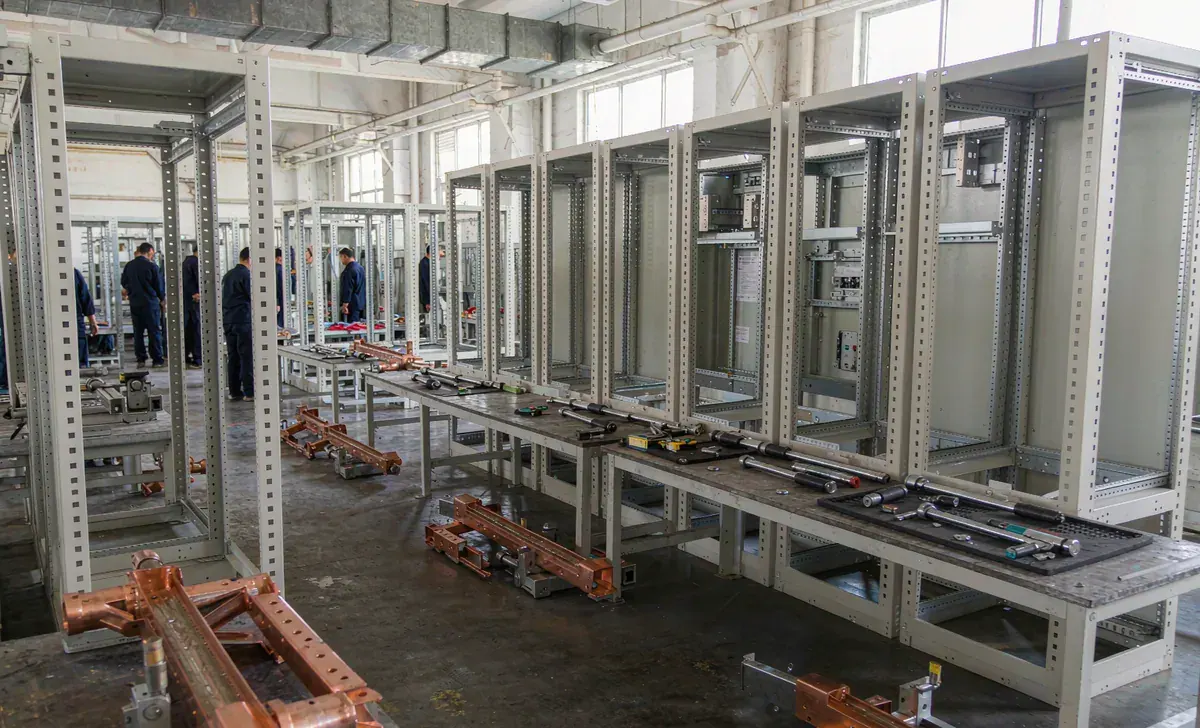
A quotation is a statement of intent. The workshop floor is a statement of capability. Between those two statements sits most of the delivery risk in power-equipment sourcing — and closing that gap is cheaper than anyone expects, because the floor answers questions the paperwork never will.
Count, don’t ask
Asking a supplier “can you build twelve designs?” will always return yes. Counting instead changes the conversation entirely:
- Fixtures and tooling. For each enclosure platform the quotation promises, are the bending jigs, mounting plates and drilling templates physically present? In one anonymised panel-shop audit, the quotation committed twelve enclosure designs and the workshop held tooling for four. Nobody had lied in conversation — the numbers only disagreed when someone bothered to count.
- Where each process lives. Assembly, copper busbar work and enclosure surface treatment look like one scope on paper but often live in two or three buildings. In the same case, the busbar cell was genuinely the strongest part of the shop — crimp-free clamped joints, consistent torque records, heat-cycle checks after each build — while eight of the twelve enclosure designs were earmarked for a partner workshop forty minutes away, under a different legal entity, never assessed.
- Records as routine, not as performance. A spray-sheet line can produce a beautiful surface for the audit visit. The question is whether pretreatment records exist for every batch, or only for the days someone might look. In Gulf humidity, powder coating applied without pretreatment peels to bare steel within a season — the IP54 rating survives the handshake and dies by year two.
What the floor can’t tell you
The floor shows present capability. It does not show whether the tested object and the shipped object are the same construction — that gap belongs to factory acceptance testing. It does not show a partner workshop you are not invited into. Which is why the read of any floor ends the same way: every process named in the quotation gets matched to a physical location, and every location outside the audited room becomes a contract condition.
The panel-shop outcome, retold as a field rule
The anonymised case ended well precisely because nobody treated the findings as disqualification. The award was re-scoped to the four qualified enclosure platforms; the remaining designs were gated behind a third-party assessment of the partner workshop; the IP54 pretreatment record became a per-panel delivery condition rather than a per-batch promise. Seventy percent of the value stayed with the workshop that had earned it.
That is the field rule in one line: a workshop’s weaknesses are negotiable; its unexamined outsides are not.
All workshop details in this note derive from audits already published as anonymised case files on this site. No client or supplier identity is referred to.