

Finding a Chinese Equivalent for an ABB Prefabricated Substation
A prefabricated substation is five subsystems in one enclosure. How an overseas buyer should judge whether a Chinese box-type substation genuinely meets the same specification, and which substitution failures hide between the devices.
Key takeaway
A prefabricated (box-type) substation can be substituted by a Chinese built only when the internal device chain (transformer, MV/LV switchgear) keeps the authorised brands named or accepts a written mandatory re-review clause, the enclosure's corrosion class matches the destination atmosphere (C4/C5 for Gulf salt), the type tests cover the integrated arrangement rather than individual devices, and the interlock loop, ventilation design and clearances are re-proven on the delivered geometry. Substitution risk does not sit in the devices; it sits in everything the enclosure adds around them.
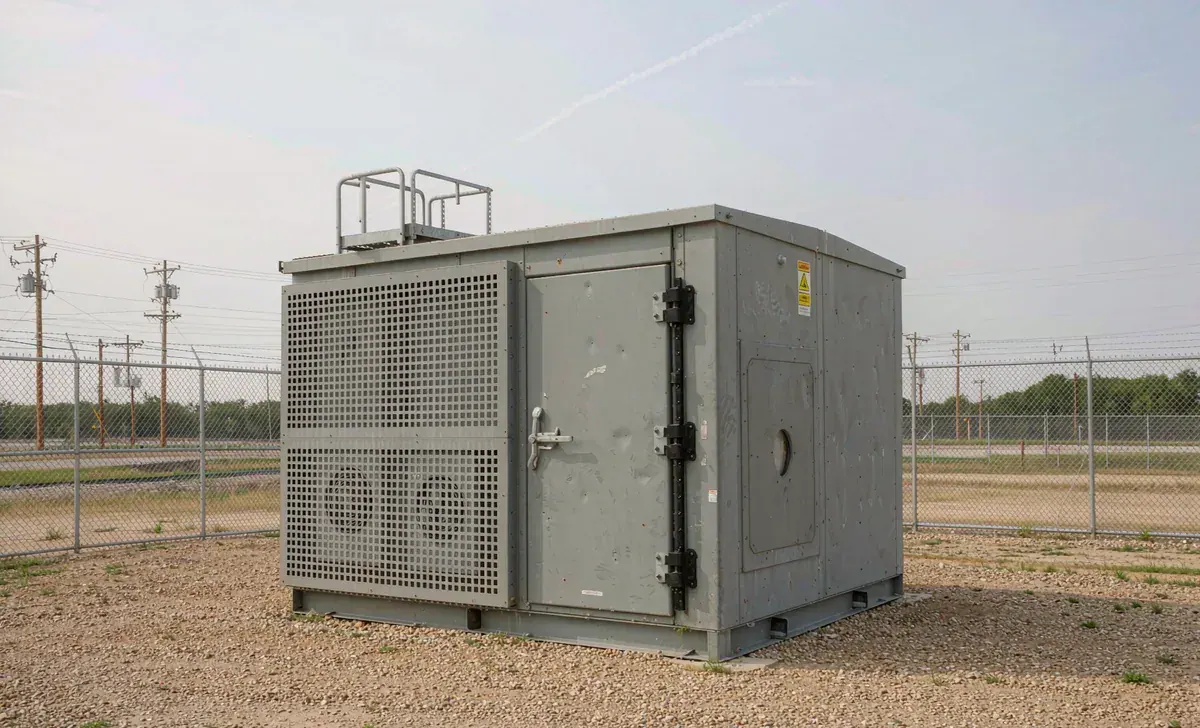
Why box-type substations are their own substitution problem
This column has already covered where cable and transformer equivalence break down. A prefabricated substation compresses the same questions into one steel box, and adds its own. Five subsystems live under one skin: the transformer, MV switchgear, LV distribution, the interlocking loop, and ventilation/corrosion protection. Any one of them outsourced at award time changes what the buyer actually receives.
So the substitution question is never “does this meet the ABB datasheet”. It is: does the delivered arrangement meet the specification with the internal brands you expected, at the corrosion class your site needs, with the clearances your crew needs to work safely?
The five verification fronts
- The internal device chain. List every internal device with its brand and its authorised-source path. A Chinese integrator frequently buys the bare transformer from one plant and the ring main unit from another; that is normal and workable. What must not happen silently is a brand outside your approved list appearing between award and delivery. Write the whitelist in; make every change a re-review.
- Integrated-arrangement type tests. The type-test certificate that covers the transformer alone, and one that covers the switchgear alone, do not add up to evidence for the assembled box. Degrees of protection under realistic heat, the temperature-rise of the LV compartment in summer, and the internal-arc scenario in your specific arrangement need their own proof.
- The enclosure itself. Where is it actually fabricated? Corrosion class per the destination atmosphere (C4 as the coastal-Europe minimum, C5 as the Gulf and salty-zone bar), door geometry and gasket quality for IP claims, and thermal behavior with the ventilation regime the tender assumed.
- The interlock loop. Five-level duty (operation against earth, against live parts, against withdrawal, against closing on earth, compartment interdependencies) is the place where box-type design is quietly de-specified. It travels with the enclosure, not with the devices; treat any redesign as a re-proof.
- On the storage side (BESS in the same family). Cell batch traceability, BMS protocol compatibility with your SCADA, and the as-built fire-suppression layout are the three lines that turn an incompletion into an unsafe deliverable. Specify them as acceptance items.
Keep it or switch it
- If your scope is a standard LV/MV box substation for a distribution feeder (common voltage classes, standard IAC rating, current brands confirmed in writing), an equivalent is defensible once the integrated thermal and arc evidence exists.
- If the enclosure travels to a marine or desert atmosphere, treat the corrosion and thermal specs as the first battle; they are the cheapest to fix on paper and the most expensive to retrofit.
- If internal-brand changes come in as value-engineering after award, price the re-review, not the discount.
- If your destination owner keeps an approved-product list, the enclosure sits inside it; read it before you read the price.
SpecSourcing’s free 48-hour initial screen returns a go / hold / walk signal on the substation offer as a whole: enclosure, devices, evidence. The paid Spec Match tier maps the internal brand chain and the enclosures’ integrated test story in writing.
Common questions
Can a Chinese box-type substation be a direct replacement for an ABB one?
What is the most common silent change in box-substation tenders?
Does the enclosure specification really matter?
Brand and model names are trademarks of their respective owners, used here for identification only. SpecSourcing is not affiliated with, authorised by, or endorsed by any of these manufacturers.