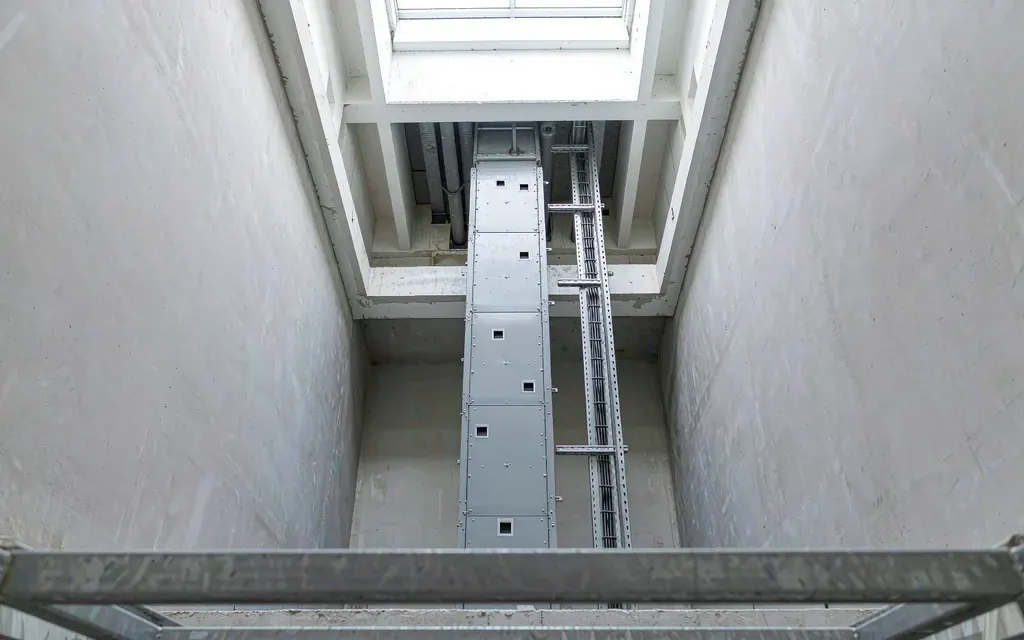
Busbar substitution turns on four groups of parameters: rated current and conductor cross-section, short-circuit withstand including its dynamic and thermal duty, IP rating against the real installation environment (riser, outdoor, humid), and joint construction. Busway is sold by length and bend, so the per-metre figure on a quotation is almost never the final price — straight runs, elbows, flanges, tap-off boxes and end feed units are priced separately, and the lengths get re-measured on site.
The joint is where these systems fail most often. Plating on the copper contact surfaces, bolt torque, and the material and ageing behaviour of the insulating block together decide whether the temperature rise holds over years. Read the scope line of the temperature-rise report to see whether it covers a standard straight section or the full run including joints. The tray side concentrates its risk in load and corrosion: whether the deflection table is stated for your actual span, coating thickness (65 μm is the common hot-dip minimum), and the re-zincing procedure used after cutting on site.
Earthing and equipotential bonding is the part most often left out: continuity where the enclosure itself acts as the PE conductor, the links between successive sections, and the overall earth impedance once the run is bonded to the tray system.
The method from there is the site standard: the free 48-hour initial screen returns a go / hold / walk verdict; Spec Match reverse-engineers the parameters and shortlists factories whose line genuinely covers them; Remote Audit reads tooling, coating process and test records at the works. You pay us and no commission flows from any factory, stated in writing.