

Standards & Certification
We don't issue certificates. We verify that the certificates a Chinese supplier shows you are real, current, and actually cover the unit you're buying. That distinction is the whole job.
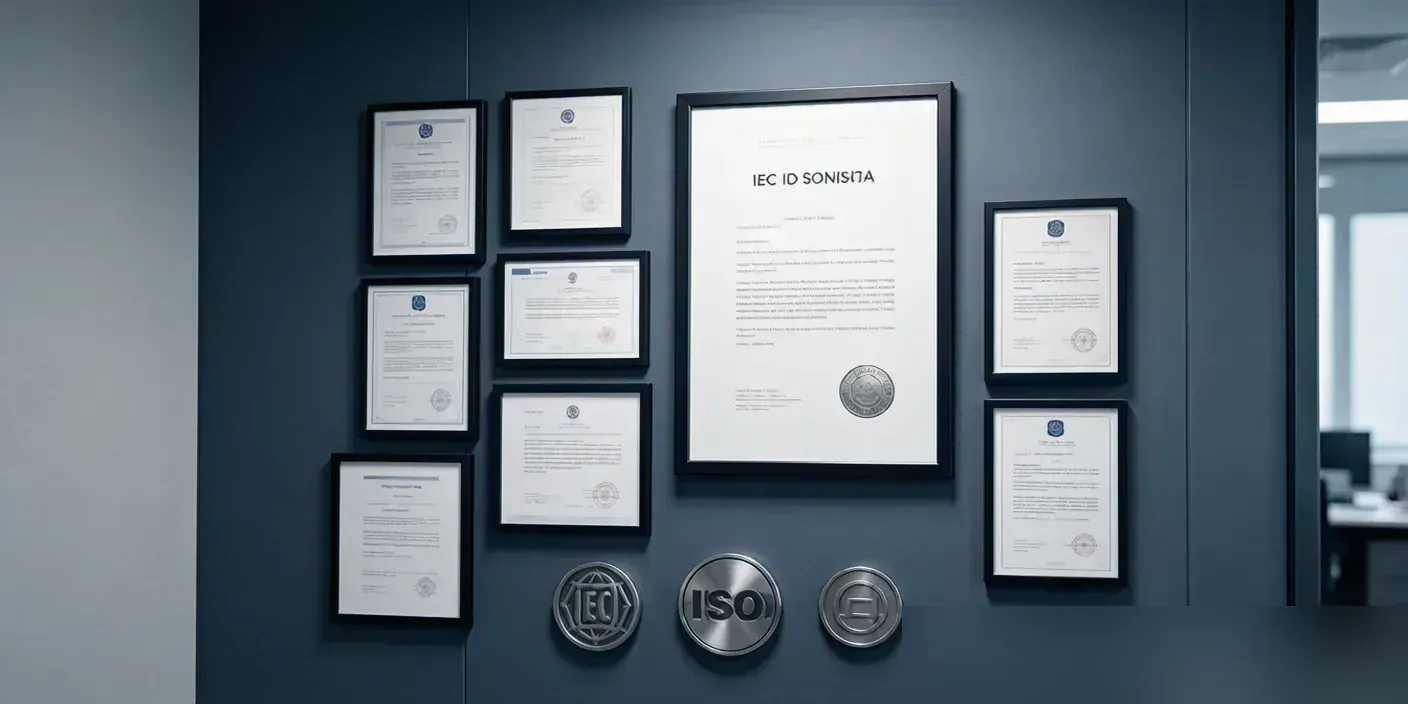
International electrical & electronic
IEC · IEEEThe backbone of transformer, switchgear, inverter and storage specs. We check the claimed IEC/IEEE test reports against the actual rating (loss, impedance, efficiency curve, THD, temperature rise) and whether the report matches the model on the PO.
Mechanical & pressure equipment
ASME · APIFor boilers, turbines, vessels and rotating equipment. We verify material certificates, design pressure and the OEM-vs-assembler boundary that sales decks blur.
Quality management
ISO 9001A baseline, not a guarantee. We check the certificate is valid and scoped to the site that makes your product, not a sister plant that passed audit two years ago.
China mandatory & market access
CCC · Production LicenceChina Compulsory Certification and the industrial production licence. We confirm the specific model is listed, not just the manufacturer, and flag where a "domestic-only" variant is being quietly exported.
Third-party marks
UL · TÜV · SGSThe marks buyers trust most are the ones most often borrowed. We trace each certificate through the issuer's public database and read the scope line. A TÜV mark on a panel doesn't cover the inverter inside it.
How we verify a certificate
- 1Pull the exact certificate number and scope line from the supplier's file.
- 2Look it up in the issuer's official public database (or request the verified copy).
- 3Confirm the model on the PO is named in the scope, not just the manufacturer.
- 4Check the issue and expiry dates against your delivery window.
- 5Flag any mismatch in the report as red or yellow, with the reason on one line.
The line we don't cross
Certification is the laboratory's job, and accreditation is the issuer's. Our role ends at "this certificate is authentic, current, and covers your unit." If a buyer needs a fresh certification or a witness test for a specific standard, we point to the right accredited body. We don't pretend to be one. This keeps us honest and keeps our incentive clean: we win when we tell you the truth, not when we stamp your paper.